
Sabal palmetto – The Carolina Palm
The Sabal palmetto , commonly known as the cabbage palm or palmetto , is a hardy, slow-growing palm native to the southeastern United States. With its thick trunk and fan-shaped leaves, it lends a robust yet elegant tropical appearance. Unlike many palms, it tolerates poor soils, salinity, and hurricanes, making it a true survivor for coastal and urban landscapes.
Origin and History
The Sabal palmetto is native to the southeastern United States , especially Florida, Georgia, South Carolina, and the Gulf Coast . It is the state tree of Florida and South Carolina , and is often seen lining streets and adorning coastal promenades. Historically, its trunk fibers were used for brushes, and its edible heart, known as “cabbage,” was a traditional food.
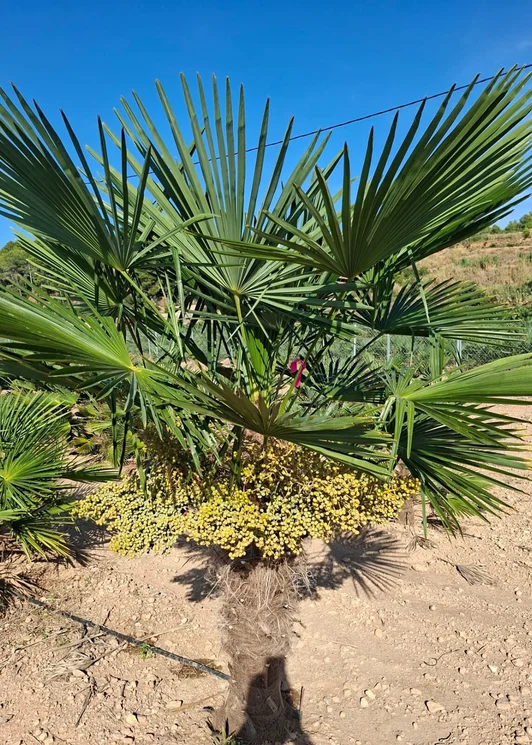
FACT SHEET
Botanical Specifications
- Botanical name: Sabal palmetto
- Common names: Cabbage Palm, Dwarf American Palm, Carolina Palmetto
- Type: Single-trunk perennial palm.
- Growth rate: Slow to moderate (30–60 cm / 1–2 feet per year when mature)
- Mature height: 12–20 m (40–65 feet)
- Spread: 3–5 m (10–16 feet) crown width
- Leaf type: Large, fan-shaped leaves, up to 1.5–2 m (5–6.5 feet) wide.
- Cold hardiness: Tolerates down to approximately -12 °C (10 °F)
- Lifespan: extremely long; often over 100 years.
Care
- Light: Thrives in full sun, tolerates partial shade.
- Soil: Very tolerant: sand, clay, even poor soils, provided drainage is reasonable.
- Watering: Drought-tolerant when mature; water regularly during establishment.
- Fertilization: Benefits from palm fertilizer with magnesium and manganese.
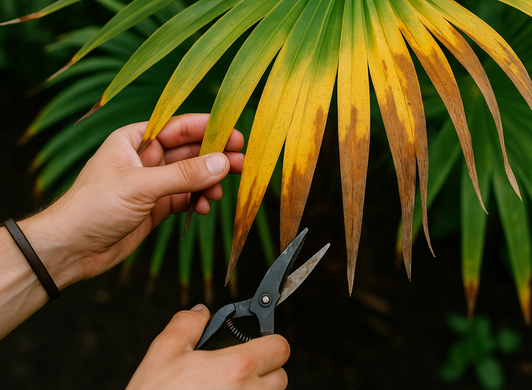
- Pruning: Remove dead fronds as needed; avoid removing green fronds.
- Winter tips: Hardy in most southeastern US climates; protect only when very young.
Benefits and Uses
- Extremely hardy and wind-resistant, ideal for coastal plantings.
- Tolerates drought and salt spray.
- Provides year-round evergreen structure.
- Habitat value for birds and wildlife.
- Iconic tree for urban landscapes, parks, and large gardens.
Landscape Inspiration
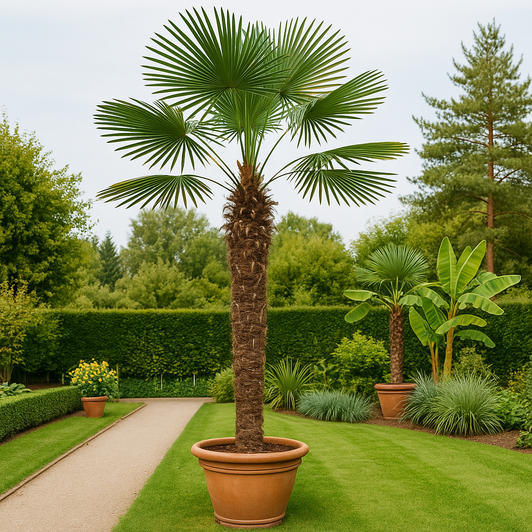
The Sabal palmetto can be used in many ways:
- Street tree: lining boulevards and avenues for a classic Southern look
- Coastal gardens: resistant to salinity and storms
- Parks and public squares: long-lived, low-maintenance shade palms
- Large private gardens: as a centerpiece or combined with smaller tropical plants
Common Problems and Solutions
- Slow growth: normal for Sabal palmetto; patience is required.
- Nutrient deficiencies (yellow or curled leaves): Use fertilizer with magnesium, manganese, and potassium.
- Cold damage (rare): only in severe frosts; protect young plants.
- Brown lower leaves: natural aging process: prune for a clean appearance.
Availability and Sizes
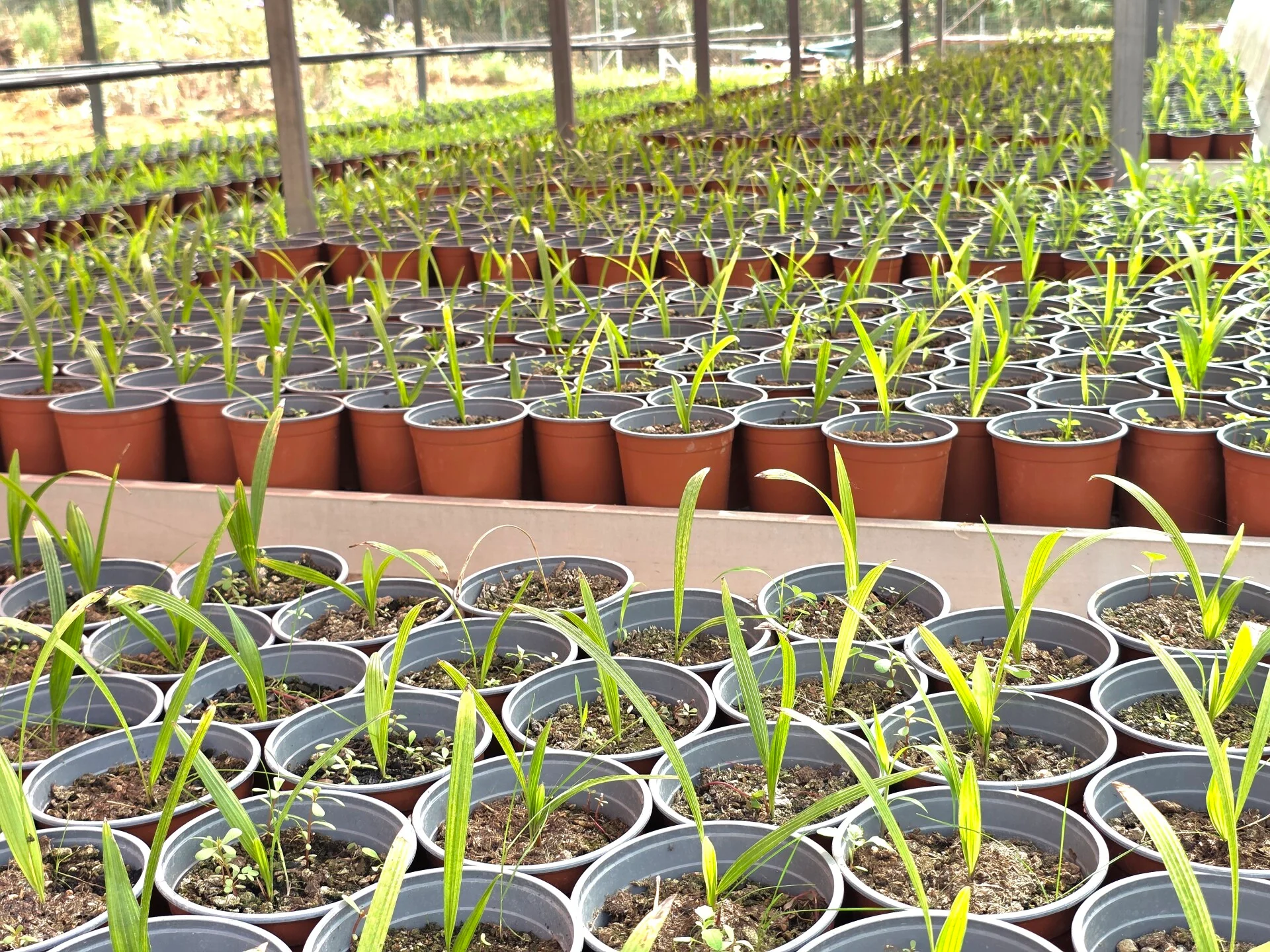
We offer Trachycarpus fortunei palms in different sizes
- 0 – 10 cm
- 10 – 30 cm
- 30 – 50 cm
- 50 – 75 cm
- 75 – 100 cm
- 100 – 150 cm
Contact
Leave your contact details if you are interested in this palm and we will get in touch as soon as possible.
Our Philosophy
«We cultivate each plant as we live: chemical-free, using green energy, and with complete respect for nature.»
«We are not in a hurry, we do not pollute: we cultivate with purpose, for a greener future.»
Pepe Ruiz Camps, Owner